Oct 28, 2026Blogs
How to Choose the Right Forklift Roller Forks (Wheel Forks)
Learn how to choose forklift roller forks for pallet-less handling. Compare capacities, ISO mounting classes, lengths, and roller forks vs. push-pull - a complete buyer's guide.
Every pallet you ship costs money - to buy, to maintain, to repair, and to ship back or leave behind. For operations that move bagged goods, boxed produce, or cartons in high volume, forklift roller forks (also called wheel forks) offer a proven way out: pallet-less handling that can eliminate pallet costs entirely.
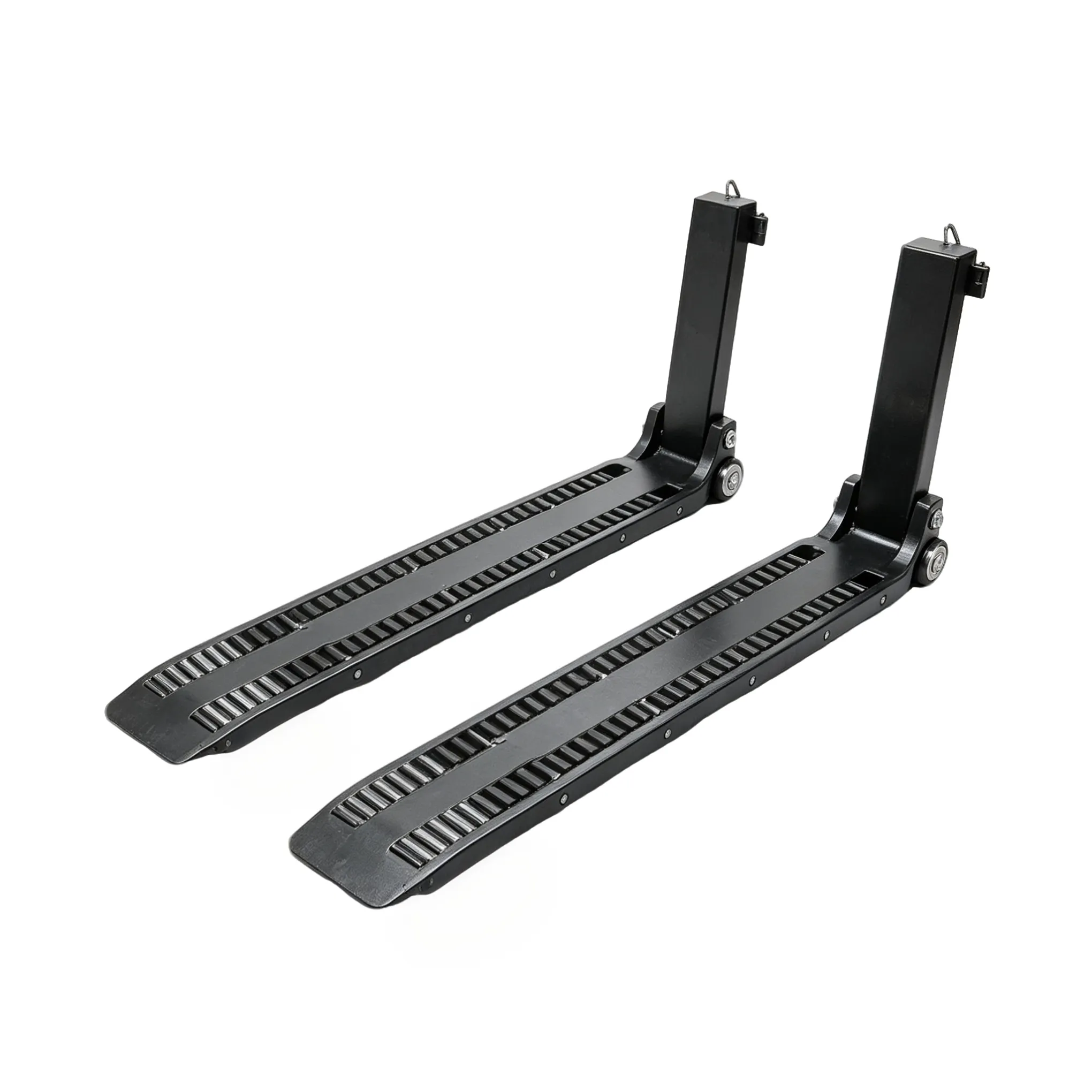
Roller forks are mechanical forks with an internal rolling mechanism built into the lower fork face. The low-friction rolling surface lets loads glide on and off the forks with minimal resistance, making loading and unloading fast and smooth - ideal for bagged products and container work. Hung directly on a standard forklift carriage, they are lighter and more cost-effective than push-pull attachments for many applications, especially container loading.
But roller forks are not one-size-fits-all. Choosing the wrong mounting class, capacity, or length will cost you downtime instead of savings. This guide walks you through exactly how to choose the right roller forks for your trucks, your loads, and your workflow.
What Are Roller Forks and When Do You Need Them?
Roller forks look like standard forks from the outside, but the lower face contains a series of durable rollers. As the forks slide under a load, the rollers spin freely - dramatically lowering friction so the load glides onto the forks. To place the load down, the rollers let it slide off cleanly and gently, protecting bags and cartons from scuffing and tearing.
Roller forks are the right choice when:
- You handle bagged products - cement, grain, fertilizer, feed, chemicals, or rice
- You load or unload shipping containers, where pallets waste space and add weight
- You want to cut pallet costs - purchasing, repairs, and return logistics
- You move the same load types repeatedly and need fast, low-effort entry under every load
- You want pallet-less capability without adding a heavy attachment - roller forks hang on your standard carriage like ordinary forks
One important prerequisite: your loads must be stable and stackable so they can be handled safely on the forks. Bagged and boxed goods usually qualify; loose or fragile items generally don't.
Step 1: Confirm Your Carriage Mounting Class
Unlike clamp attachments, roller forks mount directly onto your forklift's carriage using standard hooks. Forklift carriages follow the ISO 2328 standard, and the two most common classes are:
- ISO 2A (Class II) - for forklifts up to roughly 2,500 kg rated capacity
- ISO 3A (Class III) - for forklifts from roughly 2,500 kg to 4,500 kg
Check the carriage plate on your forklift or measure the distance between the carriage bars and the hook size before ordering. TDJ roller forks are offered in both mounting classes - models ending in A are ISO 2A, models ending in B are ISO 3A - so the same fork geometry is available for either truck class. Getting this wrong means the forks simply won't fit your carriage, so confirm it first.
Step 2: Match the Capacity to Your Load
Roller forks carry their load on a rolling surface, so their rated capacity is set conservatively. Every model is rated per pair at a 600 mm load center:
Series | Capacity (per pair) | Fork Width | Shank Width | Length Options |
|---|---|---|---|---|
RF10D | 1,000 kg | 190 mm | 80 mm | 1,100 / 1,300 / 1,500 mm |
RF20D | 2,000 kg | 210 mm | 100 mm | 1,100 / 1,300 / 1,500 mm |
Three rules to apply:
- Stay within the rated capacity at the stated load center - heavier or longer loads shift the center of gravity forward and reduce effective capacity
- Check your truck's residual capacity: roller forks add weight (128-196 kg per pair), which slightly reduces what your forklift can lift at height
- Don't size for occasional peaks: if your daily loads are 800 kg, the RF10D is the economical choice; reserve the RF20D for regular 1,500-2,000 kg loads
Step 3: Choose the Right Fork Length
Both series are available in 1,100 mm, 1,300 mm, and 1,500 mm lengths. Choose based on your load dimensions:
- The forks must fully support the load along its depth-undersized forks leave the load edge unsupported and increase the risk of load damage
- Longer is not automatically better: excess length adds weight, reduces residual capacity, and makes maneuvering in tight containers harder
- For standard pallet-footprint loads (1,000-1,200 mm deep), the 1,100 mm or 1,300 mm options cover most cases; the 1,500 mm length suits deeper or larger loads
If you handle mixed load depths, pick the length that covers your most common load and accept a modest overhang on smaller ones.
Step 4: Understand Effective Thickness and Low-Profile Entry
Roller forks are thicker than standard forks because they house the rolling mechanism - TDJ models have an effective thickness (ET) of 50 mm and a fork thickness of 51 mm.
Thanks to the low-profile roller design, the front end of the rollers sits flush with the ground. This means roller forks slide directly under loads resting on the floor — no raised base, lip, or special clearance required — which is exactly why they excel at fast container loading and unloading, where loads are often stacked flat inside the container.
Step 5: Evaluate Build Quality and Durability
Roller forks work hard — every load cycles the rollers. When comparing suppliers, look for:
- Durable roller design rated for continuous heavy-duty use, not light-duty ball bearings
- Low-friction rolling surface so loads slide easily without tearing bags or scuffing cartons
- Robust fork construction with full shank weldment and quality steel throughout
- Standard ISO mounting hooks machined to tolerance — sloppy hooks cause carriage wear and instability
Step 6: Roller Forks vs. Push-Pull: Which Pallet-Less Attachment Is Right for You?
Roller forks and push-pull attachments both enable pallet-less handling, but they suit different workflows:
Factor | Roller Forks | Push-Pull |
|---|---|---|
Weight | Light — hangs on standard carriage | Heavy — adds significant truck load |
Cost | Lower | Higher |
Operation | Rollers spin; load glides on/off forks | Gripper clamps the load face and pulls it aboard |
Best for | Bagged goods, container loading/unloading | Cartons and boxed loads, floor-loaded freight |
Speed | Very fast, minimal operator training | Slower cycle, requires operator skill |
As a rule of thumb: if your products are bagged and your priority is fast container turnaround at low cost, roller forks win. If you handle boxed or wrapped loads that need to be gripped at the face, a push-pull is the better tool. Many operations run both.
Frequently Asked Questions
Q: What are forklift roller forks used for?
A: Roller forks (wheel forks) are used for pallet-less handling: their internal rolling mechanism lets loads glide on and off the forks with minimal friction, eliminating pallet costs. They are especially popular for bagged products and container loading.
Q: How do roller forks work?
A: The lower fork face contains free-spinning rollers. When the forks slide under a load, the rollers reduce friction so the load glides on easily; when unloading, the load slides off cleanly and gently - fast, smooth, and with less product damage.
Q: What is the difference between ISO 2A and ISO 3A mounting?
A: They are carriage classes from the ISO 2328 standard. ISO 2A (Class II) fits forklifts up to roughly 2,500 kg capacity, while ISO 3A (Class III) fits trucks from roughly 2,500 kg to 4,500 kg. Choose the class that matches your forklift's carriage.
Q: What capacity roller forks do I need?
A: TDJ roller forks are rated 1,000 kg per pair (RF10D series) or 2,000 kg per pair (RF20D series) at a 600 mm load center. Match the rating to your heaviest regular load, and factor in your truck's residual capacity.
Q: Are roller forks better than push-pull attachments?
A: For bagged goods and fast container work, roller forks are lighter, cheaper, and faster. Push-pull attachments are better suited to cartons and boxed loads that need to be gripped at the load face. The right choice depends on your load type and workflow.
Ready to Order?
TDJ roller forks (wheel forks) are available in two series — RF10D (1,000 kg) and RF20D (2,000 kg) — with ISO 2A and ISO 3A mounting, fork lengths of 1,100 mm to 1,500 mm, and a durable low-friction roller design built for continuous heavy-duty use.
Not sure which series fits your trucks and loads? Contact our team with your forklift carriage class and typical load weight, and we'll recommend the right model in one business day.