Oct 29, 2026Blogs
How to Choose the Right Forklift Fork Spreader: FS2.5 VS FS3-LG Buying Guide
Learn how to choose a forklift fork spreader for wide and flexible loads. Compare FS2.5 and FS3-LG models - capacity, spreader width, load guard, and finish options in one guide.
Standard forks are spaced for pallets - but what happens when your load is 3 or even 5 meters wide? Panels, plasterboard sheets, roof sheeting, long timbers, and plastic tubing can't be carried safely on a standard fork set: the load sags in the middle, swings on corners, and in the worst cases, slips off the forks entirely.
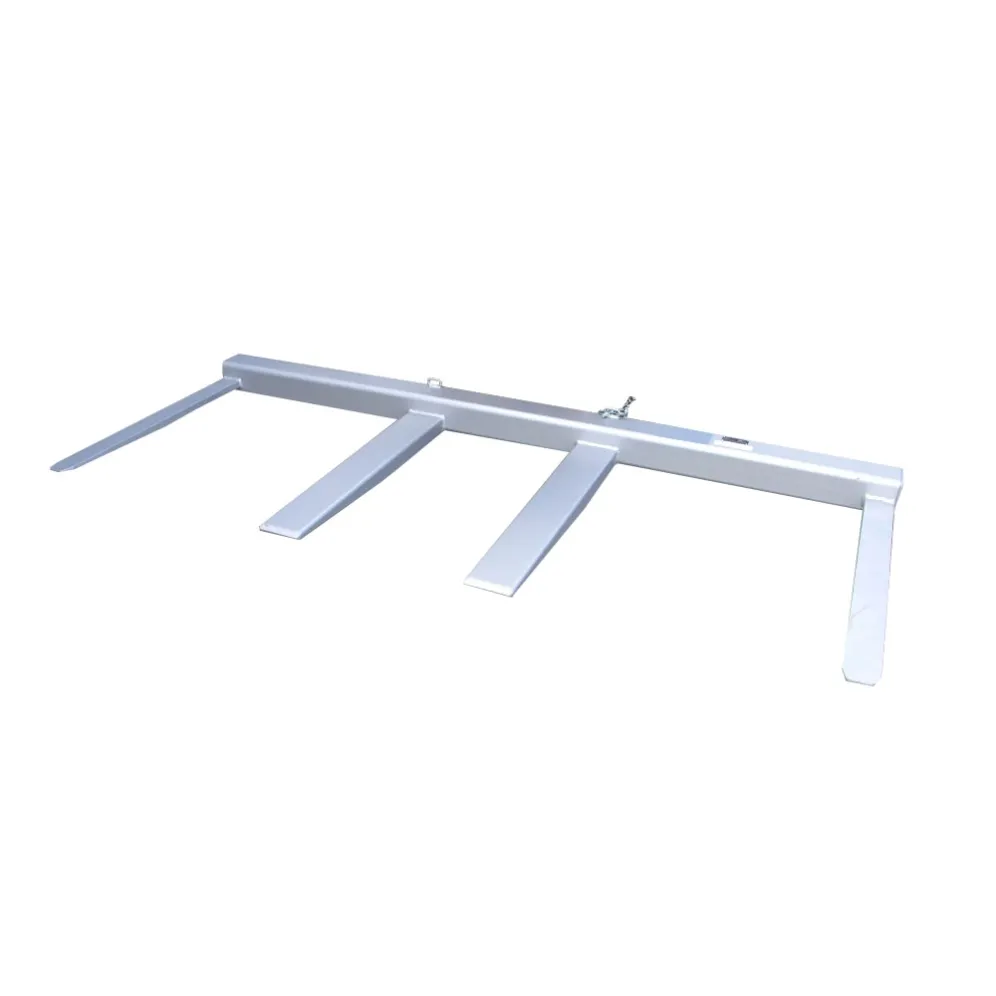
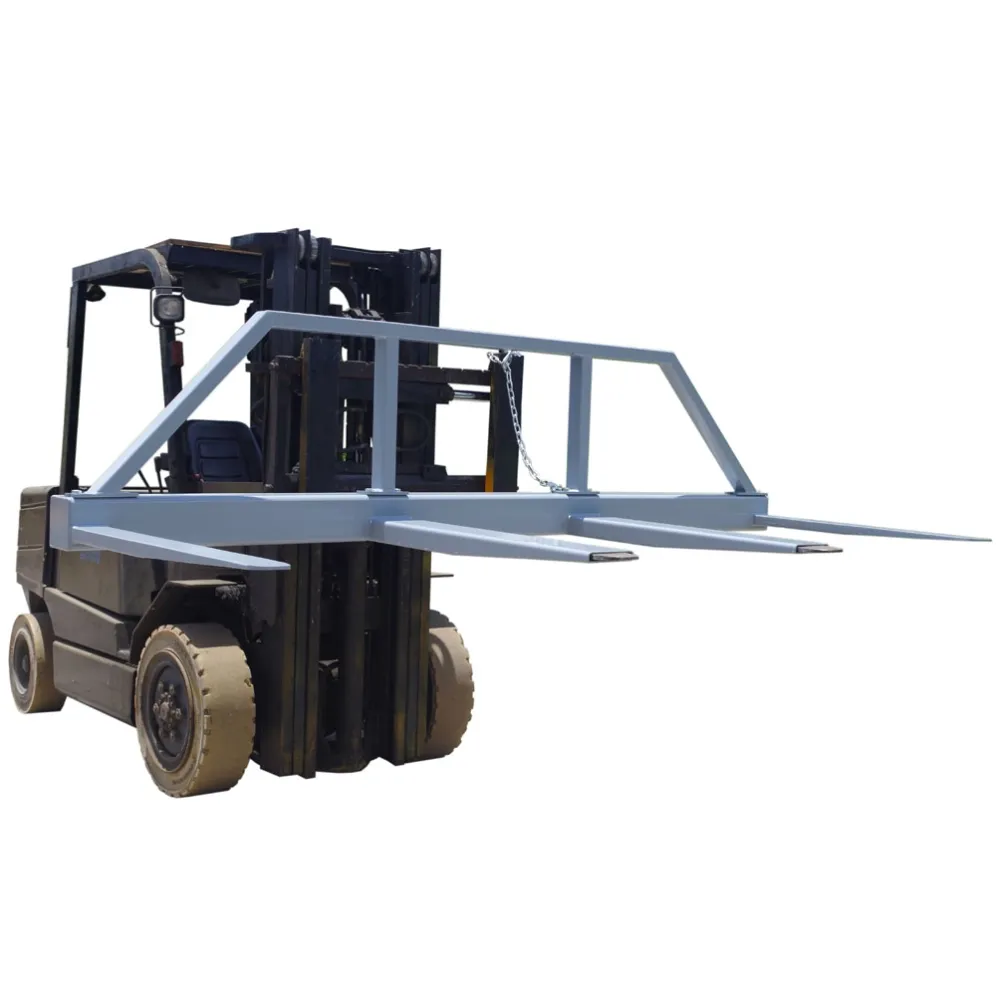
A forklift fork spreader solves this with a simple, robust idea: a rigid horizontal beam that slips onto your existing forks and carries two extra forks at its ends, extending the fork base outward to support wide loads across their full width. If you handle wide, long, or flexible loads regularly, it's one of the highest-value attachments you can add.
In this guide, we'll walk you through how to choose the right fork spreader - and compare TDJ's two models, the FS2.5 and the FS3-LG, so you can pick the right one with confidence.
What Is a Fork Spreader and When Do You Need One?
A fork spreader is a slip-on attachment: the beam's fork pockets slide over your truck's existing forks, and a safety chain secures it to the carriage. The rigid beam carries two additional forks at each end, so a wide load is supported at three or more points instead of two - dramatically improving stability across the load's full width.
You need a fork spreader when:
- Your loads are wider than your truck's fork spread - large pallets, panels, plasterboard, roof sheets
- Your loads are long and flexible - timbers, plastic tubing, extrusions that would sag between standard forks
- Wide loads are currently carried on just two forks, risking damage to the product or instability on the move
- You want a low-cost, low-maintenance alternative to a fork positioner: no hydraulics, no hoses, no carriage modification - just slide it on, chain it, and go
One important note: a fork spreader is designed for wide loads at moderate weights. Because the beam extends the load center, the attachment's rated capacity is always lower than your truck's - so check your load weight carefully before ordering.
Step 1: Assess Your Load Profile
Before comparing models, write down the three numbers that drive your choice:
- Load width - the spreader must be at least as wide as your widest regular load, ideally with the load overhanging the end forks only slightly
- Load weight - including packaging, at your real operating load center
- Load height and stability - tall or loose stacks behave very differently from neatly banded panels
If your loads are wide but neatly secured (banded panels, sheet packs), a standard spreader will do. If your loads are tall, high-stacked, or loose - think bagged or bundled product stacked 1.5 m high on a wide base - keep reading, because that's where the FS3-LG's load guard earns its place.
Step 2: Choose the Model - FS2.5 VS FS3-LG
The two models share the same slip-on design and safety-chain securing, but they differ in one key feature and in capacity:
Specification | FS2.5 | FS3-LG |
|---|---|---|
Capacity | 2,500 kg @ 600 mm LC | 3,000 kg @ 600 mm LC |
Spreader width | 3,000 mm or 5,000 mm | 3,000 mm |
Spreader depth | — | 1,200 mm |
Fork length | 1,200 mm | 1,200 mm |
Load guard | Not fitted | 600 mm high |
Unit weight | 225 kg (3 m) / 240 kg (5 m) | 260 kg |
Fork pocket size | 160 × 60 mm | 160 × 60 mm |
Pocket center | 775 mm | 775 mm |
Finish | Painted or galvanized | Painted or galvanized |
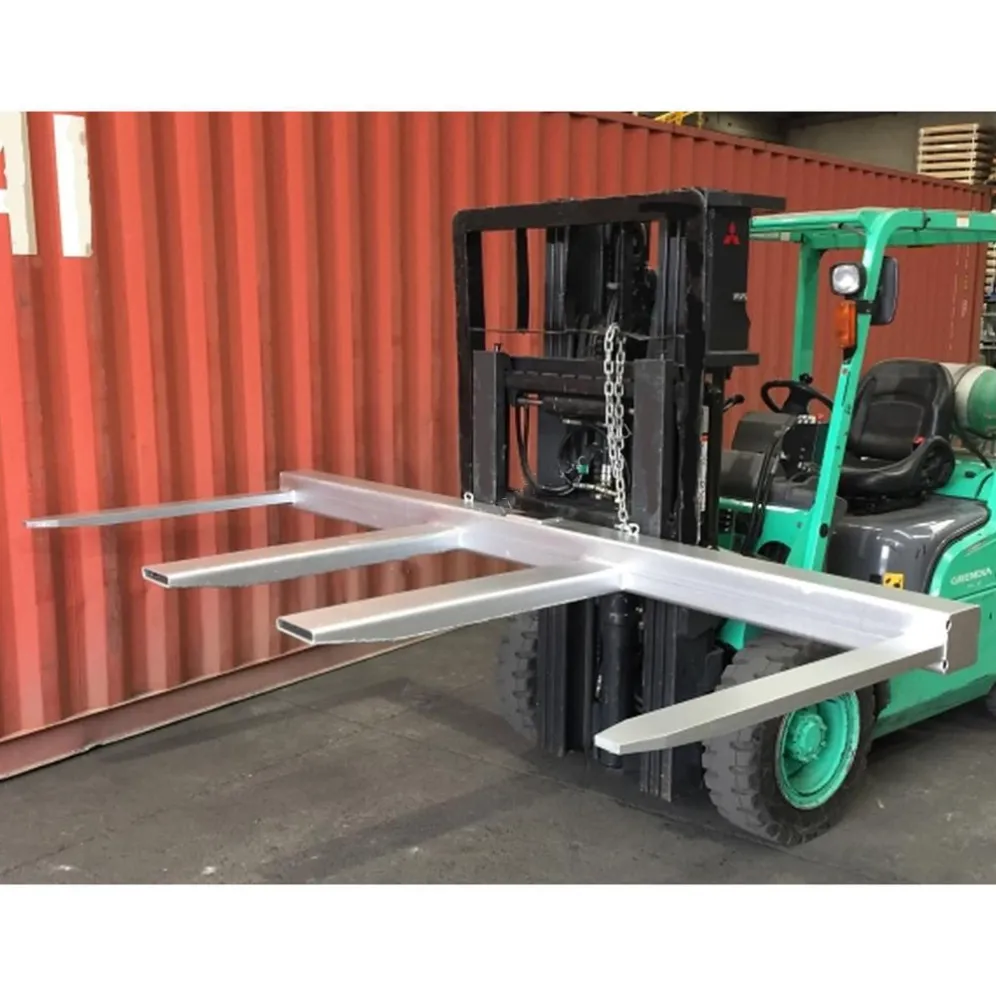
Choose the FS2.5 when your priority is reach and flexibility: it's available in a 5-meter version, and it safely picks up extra-wide or flexible loads - plasterboard, roof sheeting, timber, plastic tubing - without product damage.
Choose the FS3-LG when your loads are wide and tall or loose: it is equipped with a 600 mm load guard that helps secure higher loads against the beam, making it the better choice for loose or unstable product stacks. It also carries 500 kg more per rated load.
A simple rule: neat, banded, wide loads → FS2.5; wide + high or loose loads → FS3-LG.
Step 3: Match Capacity to Your Load Center
Both models are rated at a 600 mm load center, and both publish the position of the combined center of gravity (300 mm horizontal, 60 mm vertical for the FS2.5). Three rules to apply:
- Stay within the rated capacity - the FS2.5 is rated 2,500 kg and the FS3-LG 3,000 kg, per attachment, at the stated load center
- Check your truck's residual capacity: the spreader itself weighs 225-260 kg, and the wide beam extends the effective load center forward - consult your forklift's load chart with the attachment fitted
- Spread the load, don't overload the ends: very heavy concentrated loads at the beam's ends create bending stress; keep heavy items near the pockets
If your loads approach or exceed 2.5 tonnes regularly, the FS3-LG is the appropriate choice - never derate a lighter spreader "just this once."
Step 4: Pick the Right Spreader Width
The FS2.5 offers 3,000 mm and 5,000 mm beam widths; the FS3-LG is 3,000 mm. Choose based on your real load dimensions:
- The beam should be as wide as - or slightly wider than - your load, so the end forks support the load near its edges
- Longer isn't better: a 5 m beam on a 3 m load adds unnecessary weight, lengthens the truck, and makes yard maneuvering harder
- Think about your doorways and aisles: a 5 m spreader changes your truck's effective footprint dramatically. Measure your narrowest gate before ordering the 5 m version
For most sheet, panel, and plasterboard operations, the 3 m width is the workhorse; the 5 m FS2.5-5m serves extra-long products like extended timbers and long roof sheeting.
Step 5: Check the Fit - Fork Pockets and Installation
The fork spreader slides onto your existing forks through 160 × 60 mm fork pockets spaced at a 775 mm pocket center. Before ordering:
- Measure your fork thickness and width - they must fit the 160 × 60 mm pockets with clearance
- Check your fork spread adjustment can match the 775 mm pocket center
- Confirm your forks are long enough to support the beam safely (both models use 1,200 mm forks on the beam itself; your truck's forks must fully engage the pockets)
Installation takes minutes: lower the forks, slide the beam's pockets on, adjust to the pocket center, and secure the safety chain. The chain is not optional - it's what prevents the beam from sliding off the forks under braking. Verify it before every shift.
Step 6: Choose Your Finish
Both models are available in painted or galvanized finish:
- Painted - cost-effective for indoor, clean-environment operations such as warehouses and production plants
- Galvanized - the right choice for outdoor yards, coastal or humid climates, and corrosive environments such as fertilizer, chemical, or agricultural storage
Frequently Asked Questions
Q: What is a forklift fork spreader used for?
A: A fork spreader extends the fork base outward using a rigid beam with two extra forks, allowing a forklift to safely carry extra-wide or flexible loads such as large pallets, panels, plasterboard, timbers, roof sheets, and plastic tubing.
Q: What's the difference between the FS2.5 and FS3-LG fork spreaders?
A: Both are slip-on attachments secured by a safety chain. The FS2.5 is rated 2,500 kg and is available in 3 m or 5 m widths. The FS3-LG is rated 3,000 kg, is 3 m wide, and features a 600 mm load guard that helps secure high or loose loads.
Q: Do I need a fork spreader or a fork positioner?
A: A fork positioner hydraulically adjusts fork spacing and suits frequent pallet-to-pallet work. A fork spreader is a lower-cost, low-maintenance slip-on attachment purpose-built for wide, long, or flexible loads - no hydraulics or carriage modification required.
Q: Will a fork spreader fit my forklift?
A: Both models slide onto standard forks through 160 × 60 mm pockets set at a 775 mm pocket center, and are secured with a safety chain. Check that your fork thickness fits the pockets and that your truck's load chart permits the added weight and extended load center.
Q: How much weight can a fork spreader carry?
A: The FS2.5 is rated for 2,500 kg and the FS3-LG for 3,000 kg, each at a 600 mm load center. Always factor in the spreader's own weight (225–260 kg) and your truck's residual capacity with the attachment fitted.
Ready to Order?
TDJ fork spreaders are built for wide, flexible, and tall loads: the FS2.5 (2,500 kg, 3 m or 5 m beam) for extra-wide sheet and timber handling, and the FS3-LG (3,000 kg, load guard) for high or loose stacked loads. Both slip onto standard forks, secure with a safety chain, and are available painted or galvanized.
Not sure which model suits your loads? Contact our team with your load width, weight, and stacking height, and we'll recommend the right spreader in one business day.