Oct 12, 2026Blogs
Forklift Attachments: Expanding Capabilities Across Industries
Advantages of forklift attachments
Forklifts have long been the backbone of material handling operations, serving as indispensable workhorses in warehouse, construction sites, manufacturing plants, and logistics hubs worldwide. Their primary function-lifting and transporting heavy loads with ease and efficiency-has made them a cornerstone of modern industrial productivity. However, as operational demands grow more complex and diverse, the standard forklift alone is no longer sufficient to meet the full spectrum of material handing challenges. This is where forklift attachments come into play, acting as force multipliers that significantly enhance a forklift's utility, safety, and adaptability across a wide range of applications.
By integrating specialized attachments and add-ons, businesses can tailor their forklifts to handle tasks far beyong simple pallet movement, from lifting personnel to elevated work areas to managing irregular or oversized cargos. These attachments not only optimize equipment performance but also reduce the need for multiple specialized machines, delivering substantial cost savings and operational efficiency gains for fleet managers and warehouse operators.
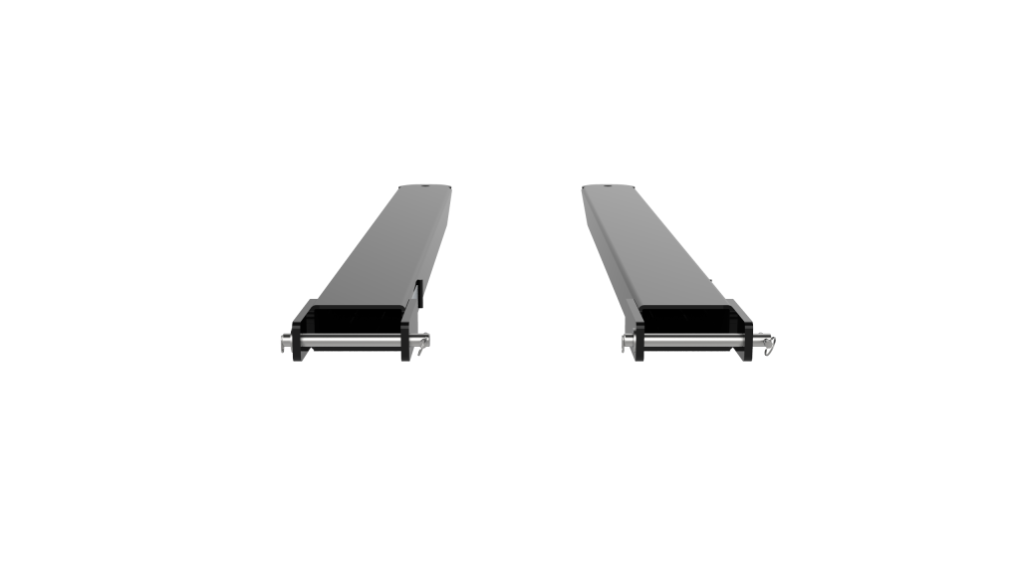
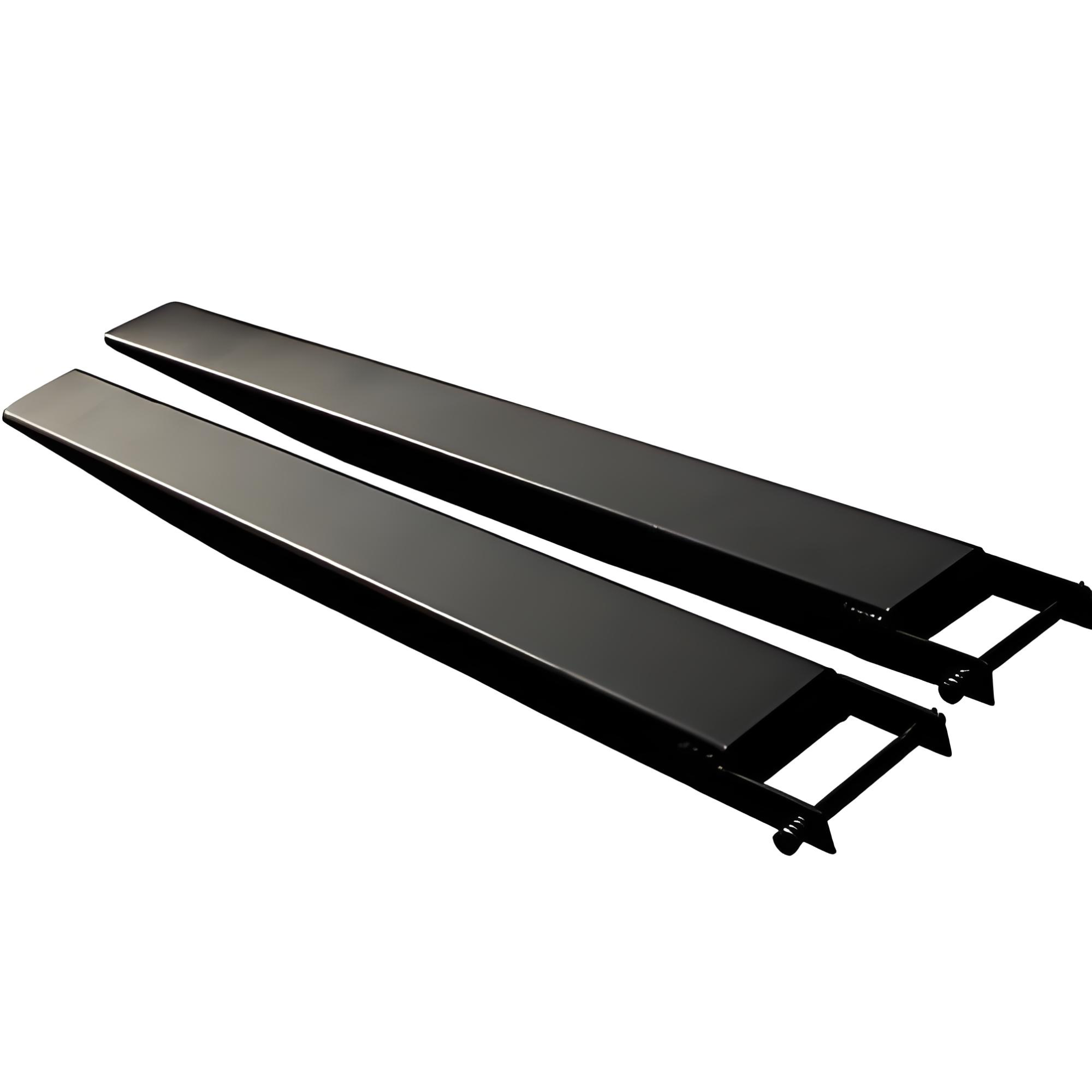
Among the most widely adopted forklift attachments are fork extensions, which offer a straightforward yet highly effective solution for handling longer, bulkier, or non-standard loads. Fabricated from high-strength steel and designed for quick, secure installation onto existing forks, these extensions effectively increase the carrying length of a standard forklift, enabling the safe transport of materials such as lumber, piping, steel beams, long pallets, and other oversized goods that would otherwise exceed the fork's original capacity.
The versatility provided by fork extensions proves particularly valuable in industries where oversized materials are a daily reality. In the construction sector, workers frequently need to move lengthy structural components like stell girders, scaffolding poles, and concrete formwork. In manufacturing facilities, production lines often require the movement of large machine parts, rolled sheet metal, or assembled components that cannot be easily handled by standard forks. Meanwhile, in logistics and distribution centers, the ability to accommodate mixed pallet sizes and extra-long cargo helps streamline sorting and shipping operations, reducing the need for manual handling and minimizing the risk of product damage.
Beyond simply enabling longer load capacity, well-designed fork extensions contribute directly to workplace safety. By proving adequate support and stability for extended loads, they prevant load shifting, tipping, or dropping during transport-common hazards associated with overextended forks or improperly secured materials. This stability is further enhanced when extensions are paired with load backrests or additional securing mechanisms, ensuring that even awkwardly shaped cargo remains firmly in place throughout the handling process.
Furthermore, the economic benefits of investing in quality forklift attachments like fork extensions cannot be overstated. Rather than purchasing a fleet of different-sized forklifts to accommodate varying load dimensions, businesses can achieve comparable flexibility through a single versatile machine equipped with the appropriate attachments. This approach reduces capital expenditure, lowers maintenance costs, and minimizes storage space requirements-a compelling value proposition for operations of any scale.
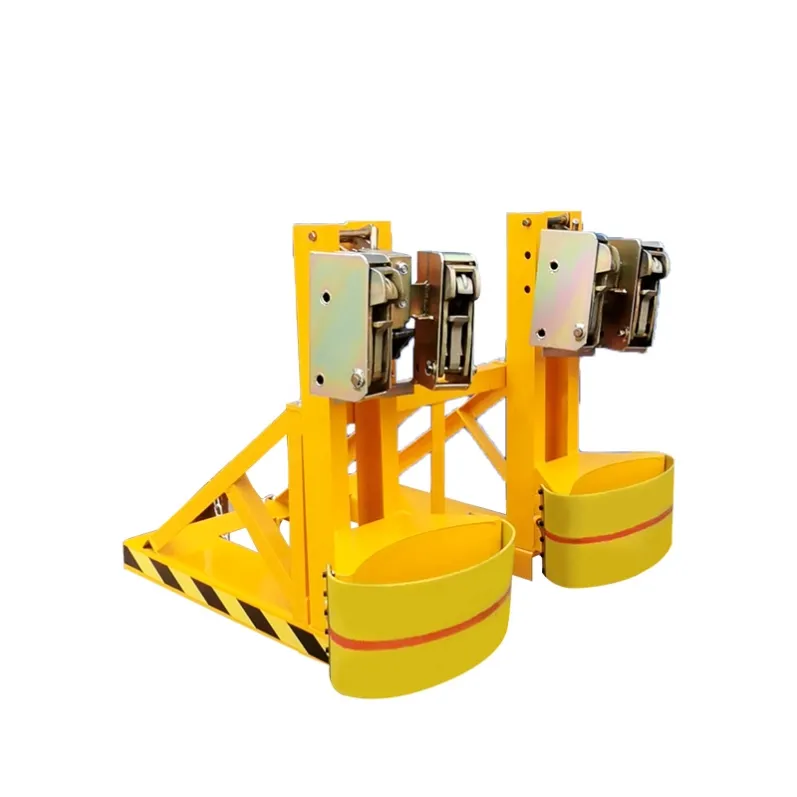
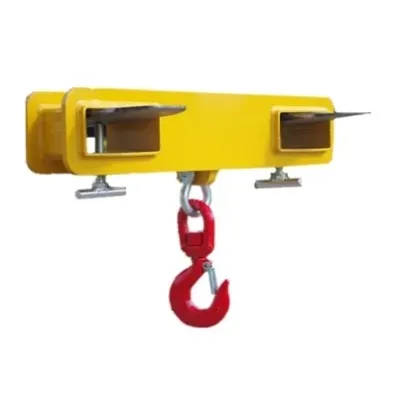
In summary, forklift attachments represent a strategic investment for any business seeking to maximize the return on its material handling equipment (MHE). Whether through fork extensions, working stations (safety cages), jib cranes (jib booms), or tipping bins, these attachments empower forklifts to perform at their peak across diverse industrial environments, driving efficiency, safety, and profitability in equal measure.